

AI isn’t just transforming how we work, it’s redefining the foundation we work on. The question isn’t whether you’re using AI. It’s whether your infrastructure is ready for where AI is headed.
Why the old infrastructure model won’t survive the next decade

We’re at a pivotal moment. Technology no longer moves in predictable, linear cycles – it accelerates. The integration of AI, cloud computing, and virtualization is happening at a scale and speed that demands a completely new approach to infrastructure.
It’s not enough to incrementally improve legacy systems. We’re entering a new era of intelligent infrastructure where adaptability, efficiency, and sustainability are built in, not bolted on.
Those who treat infrastructure as a static cost center will be left behind. Those who see it as a dynamic growth engine? They’ll lead.
What’s powering the next generation of AI workloads?
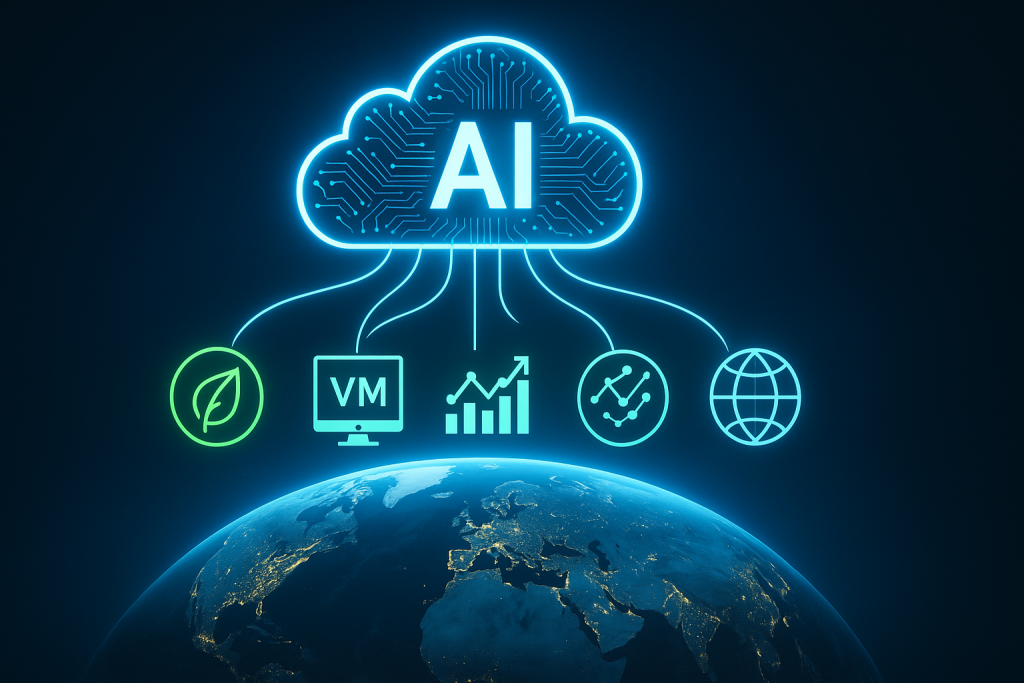
The explosive rise of generative AI, agent-based automation, and real-time inferencing is creating a new class of demands: compute-intensive, latency-sensitive, and energy-hungry. Traditional data centers simply weren’t built for this kind of load.
To stay ahead of disruption, AI infrastructure must be built to:
- Turn data into real-time insight from edge to core
Empower fast, informed decisions wherever data originates. - Natively support AI agents and LLMs
Ensure seamless collaboration with intelligent technologies. - Scale across clouds without limits
Grow with opportunity, not complexity. - Adapt instantly to shifting demands
Anticipate and self-optimize in real time.
And it must do all of this without ballooning costs or adding unnecessary complexity.
This is where anticipatory infrastructure comes in, not just built to handle today’s load, but designed to evolve with tomorrow’s exponential complexity.

Subscribe to AlphaGamma!
Receive the latest articles, news, events, business & career opportunities to your inbox!
Why virtualization is the linchpin of intelligent systems

Virtualization (trend #8 in my Tech Trends Report for 2026) has evolved far beyond server consolidation. It’s now the foundation of anticipatory agility in a world where workloads shift by the second. In modern enterprises, virtualization powers the seamless delivery of AI across edge, cloud, and on-prem systems.
Virtualization isn’t just a technical shift – it’s a strategic accelerator. By freeing software from hardware limitations, organizations can:
- Deploy AI solutions faster and see value sooner
- Anticipate and stay agile during demand surges
- Use energy smarter, not harder
Virtualization doesn’t just support AI – it multiplies its impact. When paired with intelligent orchestration, it becomes a force multiplier, enabling CIOs to dynamically allocate resources where and when they’re needed most.
Is your cloud strategy ready for what’s coming?

The old idea of cloud as “someone else’s computer” is obsolete. The new model treats the cloud as a dynamic, learning system, one that senses, scales, and adapts in real time to the demands of intelligent workloads (trend #7 in my Tech Trends Report for 2026).
Your cloud partner isn’t just a vendor, they’ve become your AI supply chain. To stay ahead, you need to ask better questions that reflect tomorrow’s needs, not yesterday’s assumptions:
- Are they built for the future of AI or stuck in the past?
- Are they scaling with smart, efficient infrastructure or holding onto legacy systems?
- Are they giving you real-time insight or just green-sounding promises?
- Is their pricing model built for exponential growth or penalizing your progress?
The smart move isn’t just shifting to the cloud, it’s choosing a cloud that anticipates.
The sustainability reckoning: can your infrastructure keep up?

One of the most overlooked consequences of AI expansion is the energy crisis it creates. Large language models and real-time decision systems don’t just consume electricity, they devour it.
Scaling AI without rethinking how we power it is a strategy destined to break financially and environmentally. We must design infrastructure that anticipates these challenges, not reacts to them. That means:
- Using advanced cooling to reduce reliance on outdated systems
- Designing smarter chips, not just faster ones
- Tapping into renewable energy as a core resource, not a side effort
- Optimizing in real time, not after the fact
The most forward-thinking infrastructure won’t just reduce energy use. it will become a strategic differentiator. As innovation accelerates and power demands grow, efficiency isn’t a nice-to-have, it’s a foundation for long-term growth and resilience.
What strategic CIOs are doing right now

The CIOs leading the pack aren’t waiting for regulations or outages to force a change. They’re using what I call anticipatory intelligence to shape the future today.
Here’s what that looks like:
- Architecting flexible hybrid clouds that expand or contract based on AI demand
- Training IT teams in anticipatory thinking to spot disruption before it hits
- Choosing vendors committed to future-ready infrastructure and responsible AI
- Embedding energy analytics into every layer of your technology foundation
- Building foresight frameworks based on Hard Trends, not speculation
It’s not about predicting everything, it’s about preparing for what you know is coming.
What happens if you wait?

You won’t just fall behind. You’ll become obsolete.
The convergence of AI, cloud, and virtualization (trends #7 and #8 in my Tech Trends Report for 2026) is shifting infrastructure from an IT discussion to a boardroom imperative. Those who fail to act now will find themselves outpaced by competitors who have already built the intelligent, adaptive, and green systems of the future.
And this transformation isn’t 10 years away. It’s already begun.
Don’t react – re-architect. Don’t adapt – anticipate.
Download the Top 25 Hard Trends Report to see exactly which certainties are shaping the future of enterprise IT – so you can act with confidence, not guesswork.
For more tips on finance and entrepreneurship, subscribe to our weekly newsletter and follow us on X, Facebook, Instagram, and LinkedIn.