
For decades, construction innovation has been mostly incremental: cheaper inputs, faster installs, marginal efficiency gains. That era is now ending.
It’s evident that a new generation of startups is attacking the industry’s most entrenched assumptions: that cement must emit CO₂, that insulation must be petrochemical, that wood is structurally limited, and that buildings are passive objects rather than active climate systems.
This isn’t just a trend anymore. I’d like to call it a “materials war”, because it’s the survival of the fittest.
The battles are being fought across three fronts: carbon, performance, and industrial scalability. We reviewed some of the prominent startups in the industry to explore the current trends. More specifically, we looked at the top 50 construction startups reshaping the industry categories.
Let’s have a closer look.
1. Cement is no longer cement
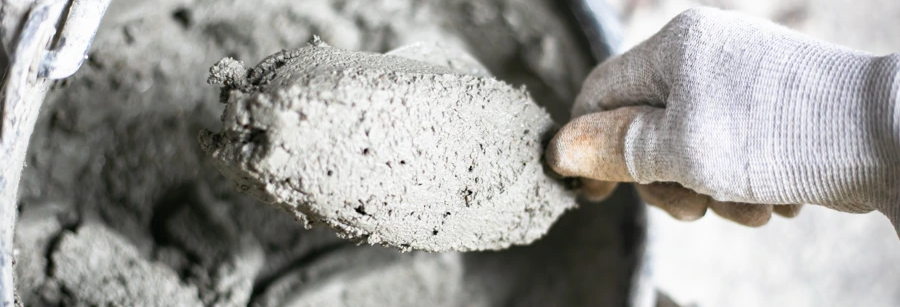
Cement accounts for roughly 8% of global emissions. That statistic has been repeated so often it’s become background noise. What has changed so far is that credible alternatives are no longer theoretical.
Since it’s such a prominent issue, around 30% of the top 50 construction startups work on resolving this challenge.
Startups like Brimstone Energy are eliminating limestone entirely, producing cement without the core source of emissions. Terra CO2 and Betolar are replacing traditional inputs with abundant minerals and industrial waste, solving both emissions and looming supply constraints of fly ash and slag.
At the same time, other ventures focus on turning CO₂ from liability into asset. Neustark injects captured carbon into recycled concrete, while Carbon Upcycling embeds emissions into cement additives that improve strength. Blue Planet Systems goes further: they produce aggregates by mimicking natural limestone formation.
Then there are the biological challengers. Biomason grows cement using microorganisms: no kiln, no extreme heat, no legacy constraints.
These developments are uncomfortable for incumbents. This is no longer about marginal decarbonization. It’s about shifting the status quo in the most widely used material on Earth.

2. The rise of “Carbon as a Feature”
A subtle but important shift is underway. Sustainability is no longer a compliance checkbox. Today, it’s a product feature with economic value.
Companies like ecoLocked embed biochar into building materials, effectively turning walls and floors into carbon sinks. Concrete4Change mineralizes CO₂ directly into concrete, while ECOncrete designs materials that actively support marine ecosystems.
This reframes the value proposition. Instead of asking, “How much less bad is this material?”, the question becomes:
“What does this material actively do?”
3. Insulation and the quiet reinvention of the building envelope
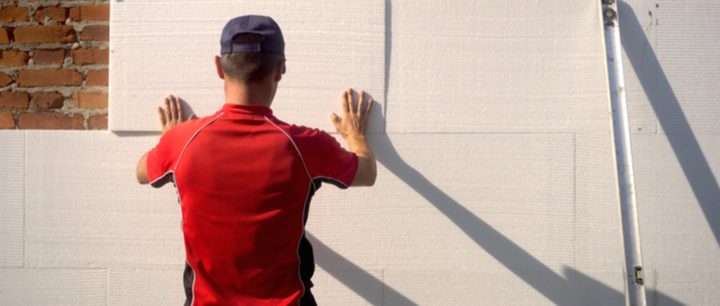
Insulation rarely makes headlines, but it’s one of the highest-leverage levers in construction. And it’s being quietly reinvented.
FenX turns mineral waste into high-performance foam that is fire-resistant and recyclable. Svenska Aerogel is industrializing aerogels, which long were considered too expensive, unlocking ultra-thin, high-efficiency insulation.
Meanwhile, bio-based challengers are emerging, using fast-growing crops and cellulose to create low-carbon alternatives to petrochemical insulation.
What makes this category interesting is not just the materials, it’s the way they are installed. The winners will not be those with the best lab performance, but those that:
- fit into existing workflows
- meet fire and safety regulations
- and don’t increase cost or complexity for contractors
4. Wood is becoming a high-tech material
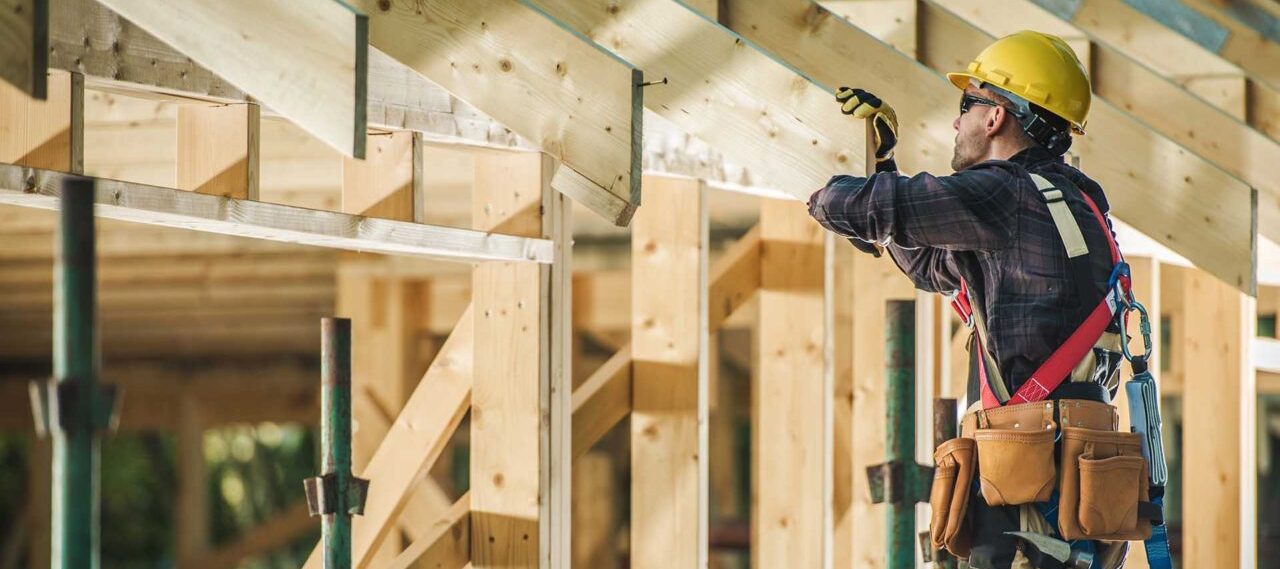
Wood is undergoing its own transformation: from a traditional material into a programmable, engineered system.
At the high end, Woodoo is modifying wood at the molecular level to create materials that are stronger, translucent, and potentially embedded with technology.
At scale, companies like SmartLam North America are enabling mass timber construction through cross-laminated timber (CLT), making multi-story wooden buildings structurally viable.
Meanwhile, players such as Kebony and Lunawood are upgrading wood into premium, durable materials that rival tropical hardwoods.
5. The overlooked battleground: additives and systems
Not all innovation is visible. Some of the most scalable opportunities sit in additives and systems.
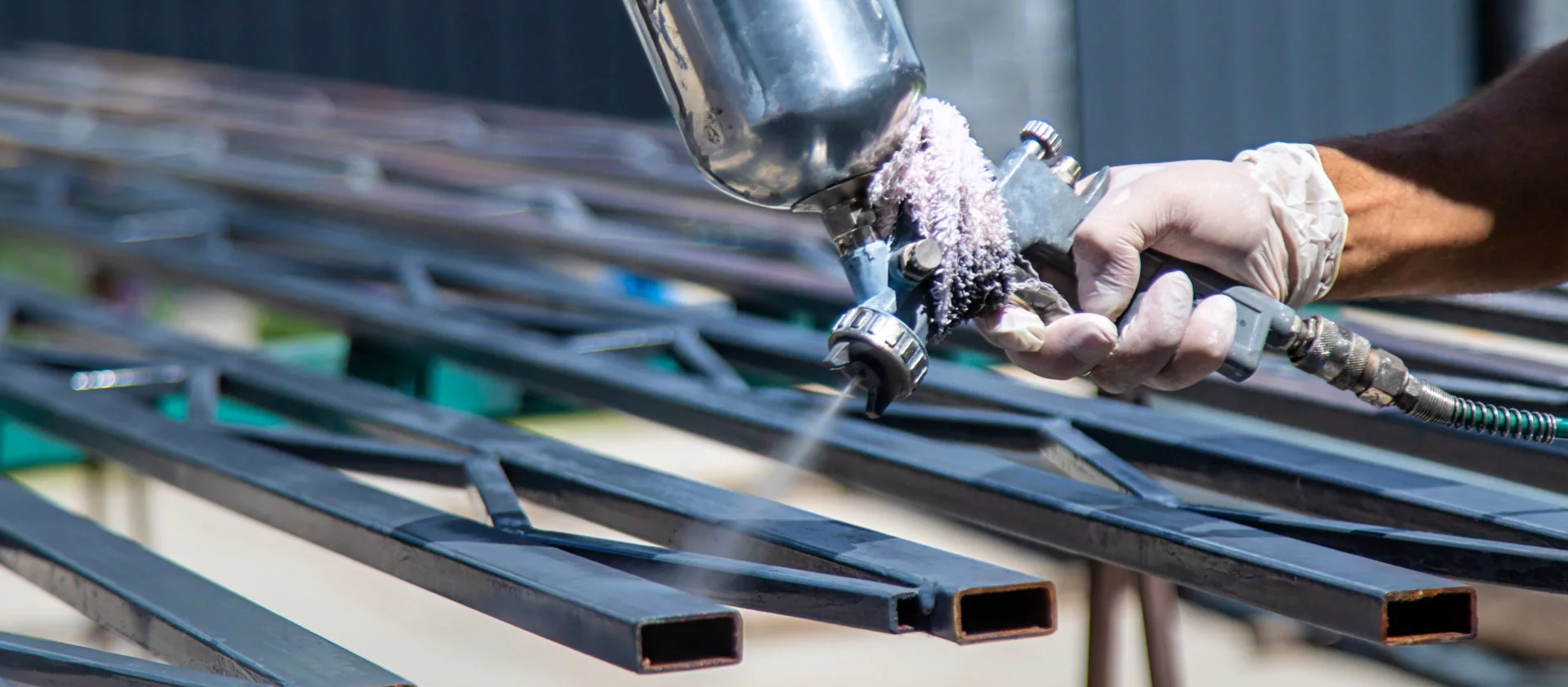
Additives that improve strength, durability, or emissions – without forcing producers to rebuild plants – are particularly powerful. And integrated systems are even more so.
Firms like Resene Construction Systems show where the market is heading: toward such solutions, not components.
Why these verticals matter the most today
These categories aren’t random. They represent the highest-leverage intervention points in construction:
Cement & concrete: The single largest emissions source in the built environment, which causes massive regulatory and financial pressure.
Insulation & building envelope: since this is the fastest way to reduce operational energy consumption, it delivers a near-instant ROI.
Wood & engineered materials: The only viable large-scale substitute for steel and concrete. Expect a structural shift in the long run.
Additives & systems: The lowest-friction adoption pathway, which means the fastest route to scale.
In other words: some verticals drive impact, others drive adoption, and a few – rare ones – drive both.

Subscribe to AlphaGamma!
Receive the latest articles, news, events, business & career opportunities to your inbox!
Reality check: this is not a software market
A significant portion of this ecosystem is not made up of venture-style startups. It is:
- capital-intensive
- manufacturing-driven
- dependent on regulation and procurement
Because of this, innovation adoption is slow. Not because the tech is weak, but because the industry itself is risk-averse.
Where incumbents are actually at risk
The threat is uneven, however.
- High risk: Cement chemistry disruption and carbon-negative materials
- Moderate risk: Insulation and envelope innovation
- Long-term pressure: Engineered wood and mass timber
The real disruption comes from combination effects, not single players.
Overview: the top 50 construction startups reshaping the industry
Below is a curated list of the top 50 construction startups shaping this transition across key verticals, not ranked in any particular order and grouped into categories they are reshaping.
Sustainable cement & concrete
Low Carbon Materials; Biomason; Terra CO2; Ecocem; ECOncrete; Basilisk; Everox; CemVision; Brimstone Energy; Neustark; AquiPor Technologies; Concrete4Change; Blue Planet Systems; Betolar; ecoLocked; Carbon Upcycling; Criaterra Innovations; Zaak Technologies GmbH
Plant-based wood substitutes
CoirWood; Honext; Celoz
Insulation materials
Thermulon; FenX; Svenska Aerogel; Cellutech; Fairm; SYSTEM 3E
️ Surface treatment (Air pollution reduction)
CTrap; Joma International
Coating & cladding systems
Resene Construction Systems
⚗️ Additives for construction materials
Graphene (category); Nanogence; Materialize.X; CemGreen
Modified wood & composites
Timua; Novawood; Arbor Wood; Lunawood; SWM Wood; Thermoarena; Kebony; Trocya Technologies; Wallong; SevenTrust; WPC Woodplastic; Silvadec; Woodplastic Group; Biofiber Tech; LIGNIA Wood; Woodoo
️ Engineered wood & structural systems
SmartLam North America; Finch Buildings
While construction is undergoing major changes, it’s far from being revolutionized. Yet, the industry is already changing underneath the surface.
It’s evident that the winners won’t just invent better materials. They will make them easier to adopt, easier to finance, and impossible to ignore.

A final question for industry leaders
Most organizations in construction don’t struggle with ideas. They struggle with execution.
The technologies are visible. The startups are real. The pressure from regulation, customers, and energy costs is not going away. Yet the gap between “knowing what’s possible” and “actually deploying it” remains wide.
If your organization is dealing with any of the following:
- difficulty identifying which innovations are actually ready for deployment
- uncertainty around which startups are worth piloting versus ignoring
- slow internal alignment between sustainability, procurement, and operations
- or a lack of structured exposure to emerging materials and technologies
…then the issue is not awareness. It’s systematic access and validation of innovation.
This is exactly where structured corporate innovation programs make the difference.
Through targeted venture scouting, startup screening, and pilot design, organizations can move from passive observation to controlled experimentation: testing real technologies in real conditions before committing at scale.
The question is no longer whether disruption is happening in construction materials. The question is whether your organization is set up to act on it fast enough. So is it?
If you’re exploring how to build that capability internally or through an external partner, our team at AlphaGamma works with construction and industrial players to design and run these innovation pipelines: from scouting to pilot execution.